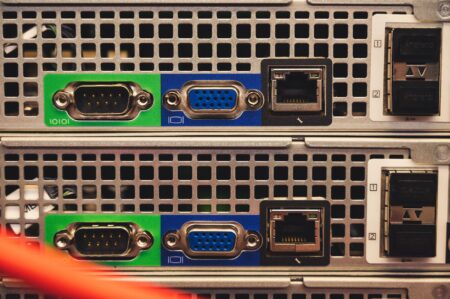



Your Files, Your Server, Your Rules
Cloud storage has become the default for most people – Google Drive, Dropbox, iCloud. The convenience is real, but so is the tradeoff: your files live on someone else’s hardware, under someone else’s terms of service, subject to pricing changes you don’t control. Nextcloud offers a different path. It’s an open-source file hosting platform you install and run yourself, giving you full control over where your data lives and who can access it.
Setting up Nextcloud on a VPS (Virtual Private Server) is one of the cleaner self-hosting projects available to intermediate users. The steps are well-documented, the software is actively maintained, and once it’s running, the experience feels close to commercial cloud storage – with mobile apps, desktop sync clients, and a web interface that works from any browser. This guide walks through the full setup from a fresh VPS to a working Nextcloud instance.

Choosing and Preparing Your VPS
Almost any major VPS provider will work – DigitalOcean, Linode, Vultr, Hetzner, and others all offer plans that fit Nextcloud’s requirements. For a personal instance or small team use, a server with at least 2GB of RAM and 20GB of storage is a reasonable starting point, though you’ll want more storage if you’re syncing large media libraries. Ubuntu 22.04 LTS is the safest OS choice here – it has long-term support, wide community documentation, and Nextcloud’s official guides are written with Debian-based systems in mind.
Before installing anything, lock down the server basics. Log in as root, create a sudo user, and disable root SSH login in /etc/ssh/sshd_config by setting PermitRootLogin no. Set up a firewall with UFW: allow SSH (port 22), HTTP (port 80), and HTTPS (port 443), then enable it. If you plan to access your Nextcloud instance over a private network rather than the open internet, pairing it with a tool like Tailscale VPN can keep your instance off the public web entirely while still making it reachable from all your devices.
Installing the LAMP Stack and Nextcloud
Nextcloud runs on PHP and needs a web server and database backend. The standard combination is Apache, MySQL (or MariaDB), and PHP – commonly called a LAMP stack. Install these with a single apt command: sudo apt install apache2 mariadb-server php php-{cli,xml,zip,curl,gd,mbstring,intl,apcu,imagick,bcmath,gmp} libapache2-mod-php. This pulls in Apache, the PHP interpreter, and the extension modules Nextcloud checks for during installation. After the install finishes, enable and start Apache and MariaDB with systemctl.
Next, secure MariaDB by running sudo mysql_secure_installation. Set a root password, remove anonymous users, disallow remote root login, and drop the test database when prompted. Then open the MariaDB shell and create a dedicated database and user for Nextcloud. The commands are straightforward: CREATE DATABASE nextcloud;, then CREATE USER ‘ncuser’@’localhost’ IDENTIFIED BY ‘yourpassword’;, then GRANT ALL PRIVILEGES ON nextcloud.* TO ‘ncuser’@’localhost’;, followed by FLUSH PRIVILEGES;. Keep those credentials handy – you’ll enter them during Nextcloud’s web-based setup wizard.
Download the latest Nextcloud release directly from nextcloud.com/install. Use wget to pull the zip file to your server, then unzip it into /var/www/html/nextcloud. Set the correct ownership so Apache can read and write the directory: sudo chown -R www-data:www-data /var/www/html/nextcloud. This step gets skipped by new users more than almost anything else, and it causes the installer to fail silently.
Create an Apache virtual host config file for Nextcloud in /etc/apache2/sites-available/nextcloud.conf. The config should point the document root at your Nextcloud directory, enable the AllowOverride All directive so Nextcloud’s .htaccess rules apply, and set up the directory permissions block. Enable the site with sudo a2ensite nextcloud.conf, enable the required Apache modules (mod_rewrite, mod_headers, mod_env, mod_dir, mod_mime), then reload Apache. At this point, navigating to your server’s IP address in a browser should load the Nextcloud setup page.
SSL, Domain Setup, and the Web Installer
Running Nextcloud over plain HTTP is a bad idea, particularly since desktop and mobile sync clients will flag the connection as insecure and may refuse to connect. Point a domain name at your VPS IP address using an A record in your DNS provider’s control panel, then install Certbot and get a free SSL certificate from Let’s Encrypt: sudo apt install certbot python3-certbot-apache, followed by sudo certbot –apache -d yourdomain.com. Certbot will modify your Apache config automatically to redirect HTTP traffic to HTTPS and install the certificate. Certificates renew automatically through a systemd timer – run sudo certbot renew –dry-run to verify that process works before walking away.
With SSL in place, open your domain in a browser. The Nextcloud installation wizard asks for an admin username and password, the data directory path (the default works fine unless you’ve mounted additional storage elsewhere), and the database credentials you created earlier. Fill those in, click Install, and the wizard runs the database migrations and initial configuration. The first load takes a minute or two. When it finishes, you’re looking at a working Nextcloud instance.
Post-Install Configuration Worth Doing Immediately
Nextcloud ships with a built-in security and setup checker under Settings > Administration > Overview. Open that page and work through any warnings it flags. Common items include missing PHP modules, the need to set up a cron job for background tasks, and memory cache configuration. For the cron job, add a server-side crontab entry: sudo crontab -u www-data -e, then add /5 * php -f /var/www/html/nextcloud/cron.php. This replaces the default AJAX-based background task runner with a proper system cron, which is more reliable and Nextcloud explicitly recommends it.
For memory caching, APCu is the simplest option for a single-server setup. Add opcache.enable=1 and opcache.interned_strings_buffer=16 to your PHP config, and add ‘memcache.local’ => ‘\OC\Memcache\APCu’ to Nextcloud’s config.php file located in /var/www/html/nextcloud/config/config.php. The difference in page load times is noticeable, especially when browsing large file directories or using the web interface heavily.
Once the instance is stable, install the Nextcloud desktop client on your main computer and the mobile app on your phone. Both are available from nextcloud.com/install and connect to your server using the domain you configured. From there, the sync behavior works exactly like Dropbox – a local folder on your machine mirrors to the server in the background. The key difference is that the server is yours, the storage cap is set by your VPS disk size, and adding another user means creating an account in your own admin panel rather than paying for a higher tier plan.
Storage limits are controlled entirely by what disk you provision on your VPS – if you fill the drive, you either delete files or resize the volume through your hosting provider’s control panel. Most providers let you expand a volume without reprovisioning the server, but verifying that your provider supports live resizes before you need it is worth a few minutes of reading their documentation now.