



What You’re Actually Choosing Between
Two portable power stations currently dominate the home battery backup conversation: the Anker SOLIX F3800 and the EcoFlow DELTA Pro 3. Both sit at the high end of the consumer market, both promise whole-home backup capability, and both carry price tags that demand serious consideration before you swipe a card. The differences between them, though, are sharper than the spec sheets suggest.
This comparison breaks down the eight factors that actually matter when choosing a home battery system – capacity, expandability, charging speed, app experience, solar compatibility, noise, build quality, and overall value. If you’re deciding between these two, the answer isn’t obvious. It depends almost entirely on what your home needs and how you plan to use it.
1. Raw Capacity: F3800 Starts Bigger
The Anker SOLIX F3800 launches with 3,840Wh of usable capacity out of the box. The EcoFlow DELTA Pro 3 comes in at 4,096Wh base capacity – a modest edge, but a real one. On paper, EcoFlow wins this round by about 256Wh, which is roughly enough to run a standard refrigerator for an additional two to three hours.
What matters more than the base number is how each unit behaves under sustained load. The F3800 is rated for 6,000W of continuous AC output, which is high enough to run central air conditioning alongside other major appliances simultaneously. The DELTA Pro 3 offers 3,600W continuous output – still strong, but noticeably lower when you’re trying to keep a whole home running during an extended outage.
For homes with high draw appliances – electric ranges, well pumps, HVAC systems – the F3800’s output ceiling is a genuine practical advantage. For apartments, smaller homes, or setups where you’re managing loads carefully, the DELTA Pro 3’s base capacity edge is more relevant.
2. Expandability: Both Scale, But Differently
Expandability is where long-term value is made or lost. The Anker SOLIX F3800 can expand up to 26,880Wh by adding up to six SOLIX BP3800 expansion batteries. EcoFlow’s DELTA Pro 3 maxes out at 12,288Wh with two add-on battery modules. That’s a significant ceiling difference if you’re planning a serious home energy storage setup.
EcoFlow’s expansion batteries are somewhat more compact and easier to physically integrate in tighter spaces. The SOLIX expansion units are larger, and stacking multiple units requires dedicated floor space or a wall bracket setup. Neither system is genuinely plug-and-forget – both require some planning around physical placement.
3. Charging Speed: EcoFlow Catches Up Fast
The EcoFlow DELTA Pro 3 supports up to 3,600W of AC wall charging and can recharge from 0 to 100% in roughly 2.5 hours. Anker’s F3800 supports up to 3,000W AC charging, putting it closer to 1.5 hours for a full charge – which sounds slower until you account for the larger base capacity. Per watt-hour, the F3800 actually charges at a comparable rate.
Both units support dual charging, meaning you can combine solar and AC input simultaneously to shorten recharge windows during partial grid availability. This matters most in disaster recovery scenarios where you’re catching grid power in short windows and need to top off quickly. The DELTA Pro 3’s 3,600W AC input does give it a slight edge in raw recharge speed from a wall outlet alone.
4. Solar Input: Serious Off-Grid Potential
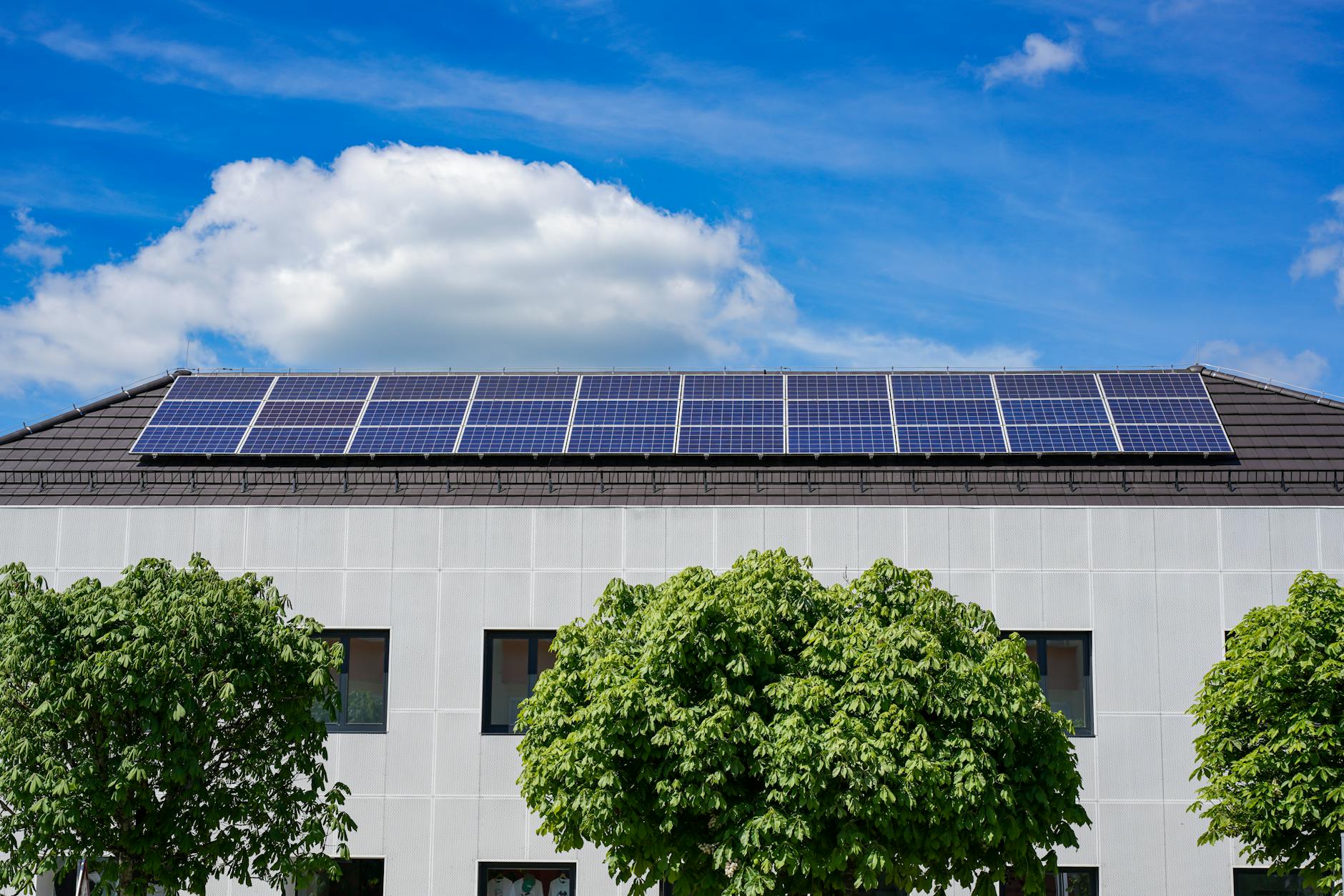
Solar compatibility is where both units start pulling ahead of older-generation home batteries. The SOLIX F3800 accepts up to 2,400W of solar input, which is generous and allows pairing with larger panel arrays without bottlenecking. EcoFlow’s DELTA Pro 3 accepts up to 1,600W of solar input at the base unit – expandable with additional MPPT inputs, but requiring more accessory investment to match Anker’s out-of-box solar throughput.
For anyone building a hybrid solar-plus-storage system, the F3800’s higher native solar input ceiling simplifies the setup considerably. You can run more panels, charge faster on sunny days, and maintain higher state of charge through partial-cloud days without adding hardware. If your setup will be primarily grid-tied with solar as a supplement, the DELTA Pro 3’s 1,600W input is likely sufficient.
Neither unit replaces a hardwired home solar installation for year-round energy independence, but both are capable enough to meaningfully reduce grid dependence during spring and summer months with a properly sized panel array.
5. App and Smart Home Integration
EcoFlow has spent several years refining its mobile app, and it shows. The EcoFlow app offers detailed real-time power flow visualization, scheduling, remote charging management, and integration with smart home platforms including Amazon Alexa and Google Home. The interface is polished enough that non-technical users can configure charge limits and discharge schedules without consulting a manual.
Anker’s SOLIX app is newer and still catching up. It covers the basics – real-time monitoring, charge/discharge settings, solar input tracking – but the depth of automation options lags behind EcoFlow’s offering. Firmware updates have been improving the experience steadily, and the hardware infrastructure supports more advanced features that Anker has indicated are in development. Still, if app sophistication is a deciding factor today, EcoFlow holds the advantage.
6. Noise and Installation: Real-World Livability
Home battery systems aren’t silent. Both units use active cooling fans that engage under load or during rapid charging. The SOLIX F3800 runs noticeably quieter during moderate operation – Anker has prioritized fan management in the firmware, and under typical home backup loads the unit is unobtrusive in a garage or utility room setting. The DELTA Pro 3’s fans are audible under heavy charging loads, though not disruptive from another room.
Both units weigh in above 60kg at base configuration, which means placement decisions are largely permanent once made. Neither is genuinely portable in the way smaller power stations are – the “portable” label applies more to the lack of permanent electrical installation than to actual mobility. Factor in clearance requirements around the unit and proximity to a transfer switch or electrical panel when choosing a location.
7. Safety Standards and Certifications
Both units use LFP (lithium iron phosphate) chemistry, which is the correct choice for a home energy storage device. LFP batteries don’t carry the thermal runaway risk associated with NMC chemistry used in older portable power stations, and they tolerate partial charge cycles without significant degradation. Cycle life for both is rated above 3,000 full cycles to 80% capacity – roughly a decade of daily use under normal conditions.
The F3800 carries UL 9540 certification, which is the standard specifically designed for energy storage systems in residential settings and required by some local codes before installation. The DELTA Pro 3 carries UL 1973 and UL 9540A certifications. If your local jurisdiction or insurance policy requires specific certifications, verify requirements before purchasing – this detail occasionally becomes a practical obstacle after the fact.
8. Price and Long-Term Value
At launch pricing, the Anker SOLIX F3800 sits around $3,999 and the EcoFlow DELTA Pro 3 is priced similarly in the $3,699 to $3,999 range depending on retailer and promotional timing. At base unit prices, they’re effectively in the same bracket. The divergence appears in expansion cost.
If you need more than 6,000Wh of total storage, the F3800 ecosystem becomes more cost-efficient per watt-hour at scale because of its higher expansion ceiling. If 6,000 to 8,000Wh is sufficient for your needs, EcoFlow’s ecosystem is mature enough and accessory pricing is competitive. Both qualify for the federal residential clean energy tax credit when paired with solar, which can offset a meaningful portion of the purchase price.
The honest answer on value is this: the F3800 is the better choice if you want maximum output headroom and are building toward a larger system over time. The DELTA Pro 3 is the better choice if you want a refined software experience, slightly faster AC recharging, and are confident a 12,288Wh maximum will cover your needs. Neither unit is overpriced for what it delivers – the question is which trade-offs fit your specific situation.
One detail worth watching: Anker has been aggressive about firmware-driven feature additions for the F3800 since launch, which suggests the app gap with EcoFlow may narrow faster than the hardware specs will change.