


Smart glasses with real-time translation capabilities are transforming international travel. Language barriers that once made ordering food or asking for directions stressful now dissolve instantly through augmented reality overlays and voice translation features. Major tech companies have pushed beyond basic prototypes to deliver consumer-ready devices that work in dozens of languages.
Modern translation glasses combine camera-based text recognition with advanced AI language models. Point at a street sign in Tokyo, and English text appears overlaid on your view. Listen to rapid-fire Spanish directions, and hear them translated through bone conduction speakers. The technology has matured enough that these devices now serve as genuine travel companions rather than expensive novelties.

1. Google Glass Enterprise Edition 2
Google’s Enterprise Edition 2 remains the most refined smart glasses platform for translation applications. The lightweight titanium frame houses a high-resolution display that projects translations directly into your field of view. Google Translate integration provides real-time camera translation for over 100 languages, with particularly strong performance in major European and Asian languages.
The device excels at translating printed text like menus, signs, and brochures. Point the built-in camera at Japanese text, and English translations appear as overlay text in your peripheral vision. Battery life extends to a full day of moderate use, making it practical for extended sightseeing sessions. The bone conduction audio system lets you hear spoken translations without blocking ambient sounds – crucial for staying aware of traffic and crowds in unfamiliar cities.
Voice commands activate translation modes hands-free, essential when your hands are occupied with luggage or maps. The Android-based operating system supports additional travel apps, turning the glasses into a comprehensive navigation and communication tool.
2. Vuzix Blade Upgraded
Vuzix positioned their Blade model as a direct competitor to Google Glass, with stronger emphasis on consumer applications including travel translation. The see-through display technology provides clearer text overlays than earlier AR glasses generations. Microsoft Translator integration handles both text and conversation translation across more than 70 languages.
The Blade’s camera captures text from various angles and lighting conditions, making it reliable for reading outdoor signage or dimly lit restaurant menus. Voice translation works through the integrated microphone array, which filters background noise effectively in busy tourist areas. The glasses connect to your smartphone’s data connection, ensuring access to translation services anywhere you have cellular coverage.
Battery optimization allows 8 hours of translation use, though intensive camera-based translation drains power faster. The frames accommodate prescription lens inserts, making them practical for travelers who need vision correction.
3. Epson Moverio BT-40
Epson’s Moverio BT-40 takes a different approach with dedicated smart glasses designed specifically for overlay applications like translation. The binocular display system provides a wider field of view for translation text, reducing eye strain during extended use. Compatibility with multiple translation platforms gives users flexibility in choosing their preferred language service.
These glasses shine in group travel situations where multiple people need translation assistance. The display brightness adjusts automatically to lighting conditions, maintaining readability in bright sunlight or dim interiors. The tethered design connects to a small processing unit, distributing weight more evenly than all-in-one designs.
Real-time conversation mode displays translated text from both speakers simultaneously, making restaurant conversations and shopping negotiations smoother. The processing unit houses a more powerful processor than integrated designs, enabling faster translation speeds and more complex language processing.
4. Microsoft HoloLens 2
While primarily marketed as an enterprise mixed reality platform, HoloLens 2 offers sophisticated translation capabilities through Microsoft’s ecosystem of language services. The holographic display technology creates translation overlays that appear naturally integrated with the environment. Hand gesture controls eliminate the need for external controllers or voice commands in noisy environments.
The device’s spatial mapping creates persistent translation annotations. Point at a monument’s plaque in Italian, and the English translation remains visible as you move your head, unlike simpler systems that require constant re-targeting. This feature proves invaluable in museums and historical sites with extensive multilingual information.
Advanced noise cancellation in the microphone array handles conversation translation in crowded spaces where other devices struggle. The computing power supports offline translation for common language pairs, maintaining functionality in areas with poor internet connectivity.
5. Nreal Light
Nreal Light glasses focus on consumer accessibility with a smartphone-tethered design that leverages existing translation apps. The lightweight form factor resembles regular sunglasses, making them less conspicuous for travel use. Connection to your phone’s translation apps provides access to familiar interfaces and your preferred language settings.
The glasses work particularly well with Google Lens and similar visual translation services. The camera captures clear images for text recognition while the display shows translations without blocking your view of surroundings. This balance of functionality and discretion appeals to travelers who want translation assistance without wearing obviously technical devices.
Battery life depends on your connected smartphone rather than limited internal batteries, providing all-day capability with portable charging options. The glasses support various smartphone brands, avoiding platform lock-in that limits other smart glasses options.
6. Magic Leap 2
Magic Leap 2 brings enterprise-grade translation capabilities to travel applications through its advanced spatial computing platform. The device maps physical spaces and anchors translations to specific locations and objects. Point at a street sign, and the translation appears exactly where the original text sits in your vision.
The system’s understanding of 3D space enables more intuitive translation interactions. Gesture at text across the room, and translations appear at the appropriate distance and angle. This spatial awareness reduces the disorientation common with basic overlay systems that place translations in arbitrary screen positions.
Voice translation benefits from the device’s sophisticated audio processing, which isolates specific speakers in crowded environments. The system learns your travel patterns and can pre-load translations for commonly encountered phrases and signs in your current location.
7. Rokid Air AR Glasses
Rokid Air positions itself as an affordable entry point into AR translation glasses. The Android-based system runs standard translation applications while providing a comfortable wearing experience for extended travel days. The USB-C connection to smartphones or dedicated processing units offers flexibility in power and processing arrangements.
Text translation works reliably with major language services, though the display resolution limits readability of complex characters like traditional Chinese or Arabic scripts. Voice translation performs well in quiet environments but struggles with background noise compared to more expensive alternatives. The trade-off between cost and capability makes these glasses suitable for casual international travel rather than business applications.
The lightweight design and prescription lens compatibility address practical travel concerns. Multiple wearing configurations accommodate different face shapes and preferences, important for all-day comfort during long sightseeing sessions.
8. Apple Vision Pro (Translation Apps)
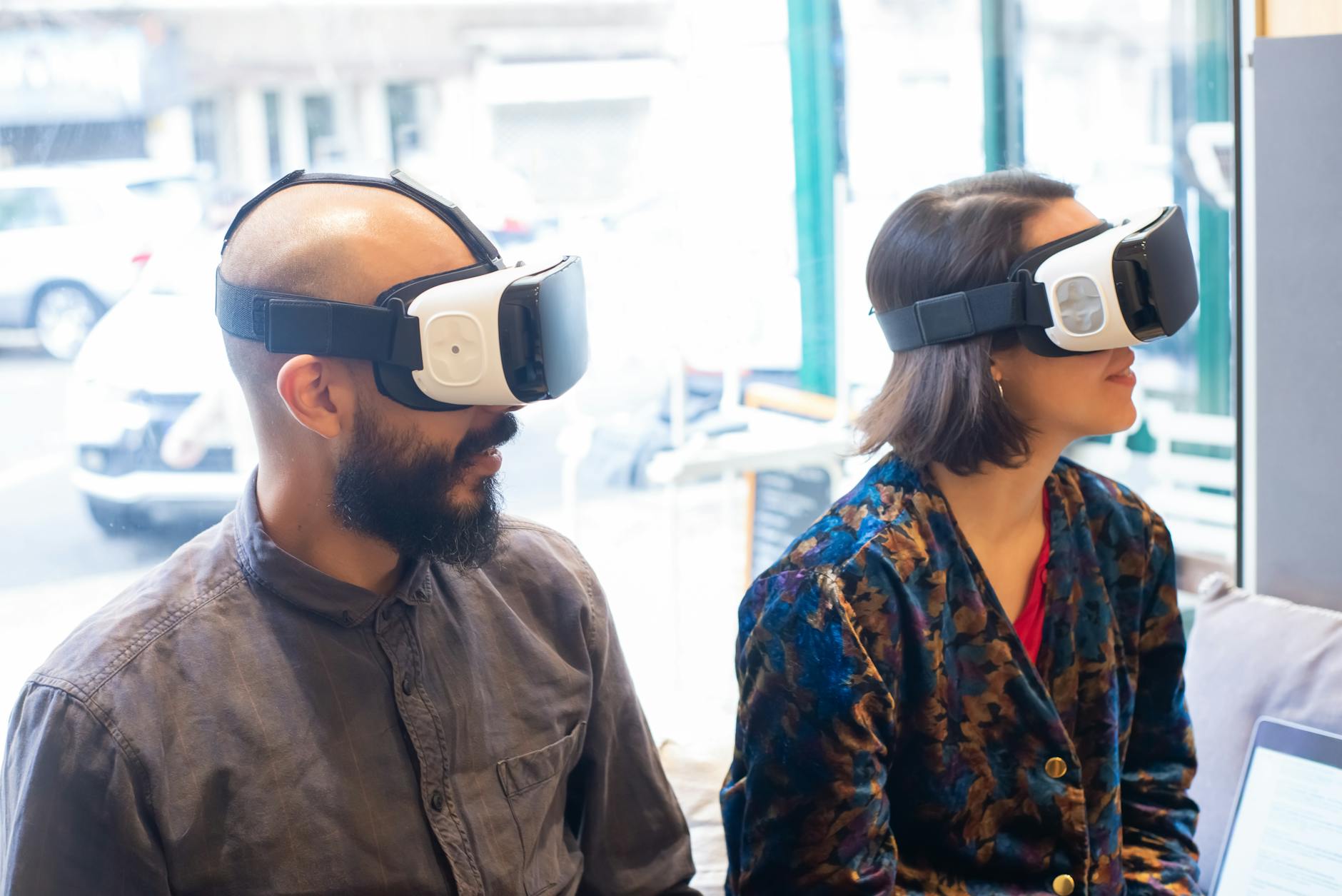
Apple’s Vision Pro, while primarily positioned as a spatial computing platform, supports sophisticated translation applications through its App Store ecosystem. Third-party developers have created translation apps that take advantage of the device’s high-resolution displays and advanced camera systems. The hand and eye tracking eliminates the need for external controllers when selecting text for translation.
The device’s computational photography captures clear images of text in various lighting conditions and angles. Machine learning processing happens locally for many language pairs, maintaining translation speed without internet connectivity. The immersive interface allows for side-by-side comparison of original and translated text without losing context.
Battery constraints limit practical travel use to shorter sessions, making it more suitable for specific translation tasks rather than all-day wear. The premium price point and distinctive appearance make it less practical for casual travel than dedicated translation glasses.
Smart glasses technology has evolved beyond experimental gadgets to become practical travel tools. As augmented reality hardware continues improving while translation AI advances, these devices are becoming essential for confident international travel. Whether you choose enterprise-focused options like Google Glass or consumer-friendly alternatives like Nreal Light, real-time translation glasses eliminate language barriers that once made international exploration daunting. The combination of improving battery life, better displays, and more accurate translation algorithms makes 2024 the turning point for mainstream adoption of this transformative technology.
Frequently Asked Questions
Do smart glasses work offline for translation?
Some models like HoloLens 2 and Vision Pro support offline translation for common language pairs, while others require internet connectivity.
How long do translation smart glasses batteries last?
Battery life ranges from 6-8 hours for intensive translation use, with some tethered models using smartphone power for extended operation.